Is an IV drip in your hotel room safe after a procedure?
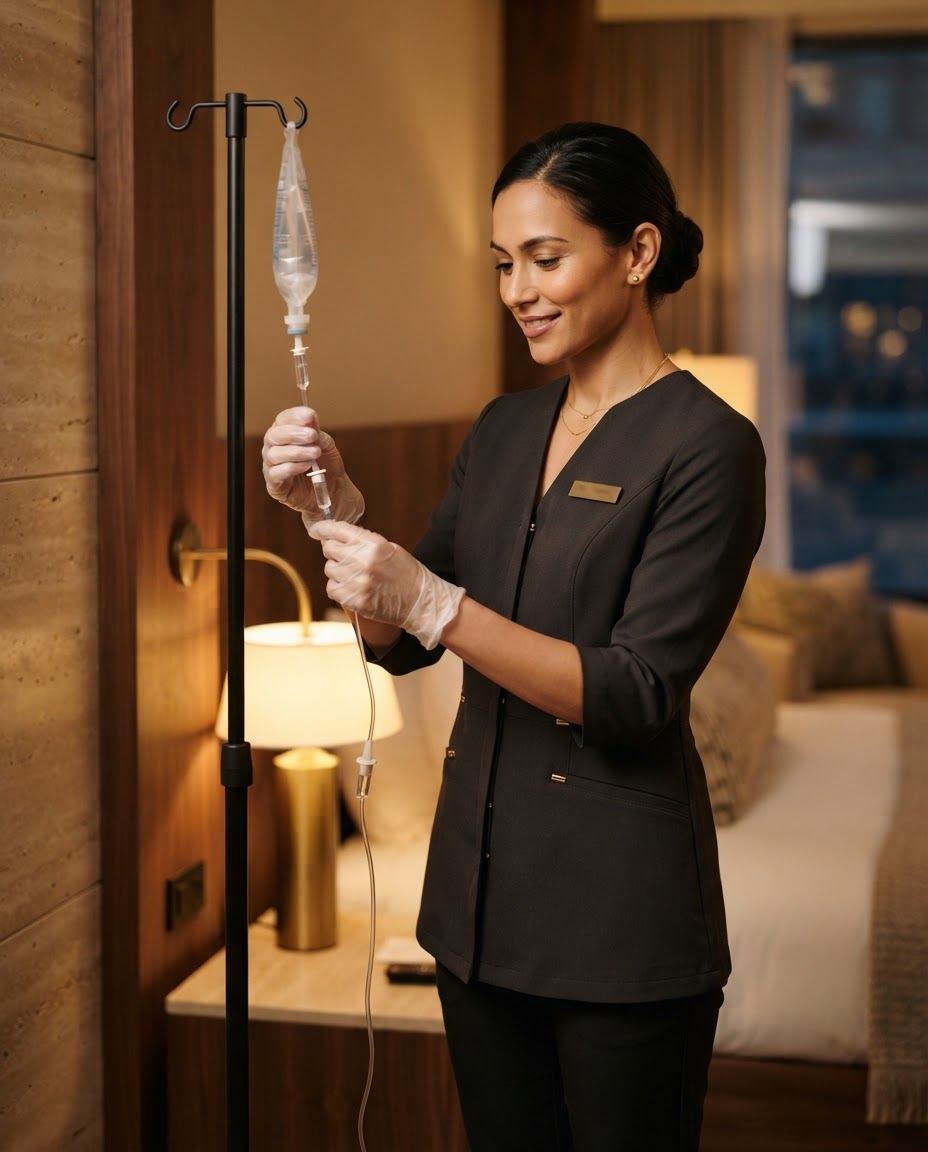
An IV drip in a hotel room is low-risk for most healthy adults when it is done well, but it is still a medical procedure: a needle goes into a vein, and fluid and medicines go straight into your blood. Done carelessly, it can cause infection, bruising, a reaction to an ingredient, or too much fluid for a heart or kidneys that cannot handle it.
If you came to Istanbul for a hair transplant, dental work or cosmetic surgery, you may spend a few days in a hotel, tired, a little swollen, and far from your own doctor. A drip in your room can sound like an easy way to feel better before the flight home. So it is fair, and smart, to ask questions first. A good service will be happy to answer them.
What should you ask an IV service before a drip in your hotel?
Before you confirm a drip in your hotel, ask who reviews your booking, who places the cannula, whether the materials are sealed and single-use, and what happens if something goes wrong. You can ask in writing, so you have the answers. The full checklist:
- Who reviews my booking? A doctor should read your health details first and be able to say no.
- Who will place the cannula? It should be a licensed nurse.
- Are the bags, vials and needles sealed and single-use? They should be opened in front of you.
- Will you check my blood pressure, pulse and oxygen before the drip and during it?
- Does the nurse bring an emergency kit, with medicines for an allergic reaction?
- Will the nurse stay until the drip is finished and the cannula is out?
- What is the full price, including any visit or night fee, before I confirm?
- Can I talk to the coordinator in a language I speak well?
- What happens if something goes wrong? Who is the doctor on call, and when do you call an ambulance?
If the answers are vague, or someone pushes you to book without any health questions, take that as a sign to wait. You can see how we answer each point on our safety page.
When can you have a drip after a hair transplant, dental work or cosmetic surgery?
You can have a drip after a procedure only when the clinic that did it agrees, and from the day they say, because they know your case best. Some clinics are happy with it the next day. Others prefer you to wait, for example after general anaesthesia or if you have a drain.
- Share your discharge notes and the list of medicines the clinic gave you, such as antibiotics, painkillers or anti-swelling tablets. The doctor who reviews your drip needs to see them.
- After a hair transplant, the cannula goes in the arm or hand, never near the grafts or the donor area. Read more in IV therapy after a hair transplant.
- After dental work, tell the doctor about any bleeding, swelling or medicines from your dentist.
- After cosmetic surgery, the timing is decided together with your surgeon. A drip never replaces their check-ups, dressings or compression garments.
Our Post-Op Recovery drip is fluids and vitamins for comfort in the days after a procedure. It does not speed up healing, and the doctor may adjust it, postpone it or decline it.
How should you prepare for the flight home after surgery?
Before a long flight after surgery, drink water regularly and move around, because the main risks are dehydration and blood clots in the legs. Ask your clinic if you are fit to fly and when. Simple steps help most:
- Drink water regularly, and go easy on alcohol and strong coffee.
- Walk in the aisle when you can, and move your feet and ankles while seated.
- Wear compression socks only if your doctor or surgeon advises them.
- Ask your clinic if you are fit to fly and when.
Know the warning signs of a blood clot. Pain or swelling in one calf, chest pain, or sudden shortness of breath, during the flight or in the days after, is an emergency. Get medical help at once.
Some travellers ask for a Jet Lag Reset or a recovery drip the day before they fly. That can be reasonable for comfort after the doctor’s check, but water and moving around matter more than any drip.
What paperwork should medical tourists keep with them?
Medical tourists should keep a list of their medicines and allergies, the clinic’s discharge notes, hotel details and travel insurance details, on the phone and on paper. In a new country, written information saves time and mistakes. In detail:
- A list of your medicines and doses, and your allergies, in English or Turkish.
- Your clinic’s discharge notes and their phone number.
- Your hotel name, room number and address.
- Your travel insurance details.
Send the medicine and allergy list with your booking. It is often the most useful thing the doctor sees.
Who should not have an IV drip in a hotel?
Some people should not have a drip in a hotel room at all, or need their own doctor’s OK first. The doctor will decline or postpone it if you have:
- Pregnancy, unless your own doctor approves it.
- Kidney failure or heart failure.
- Some medicines, including some blood thinners, diuretics, and heart or kidney medicines.
- A known allergy to any ingredient.
- Acute symptoms, such as chest pain, shortness of breath, fainting or high fever.
When should you go to your clinic or a hospital instead of having a drip?
A drip is not the answer when something is wrong after surgery: chest pain, a swollen leg, heavy bleeding or signs of infection need your clinic or a hospital. Call your clinic, go to a hospital emergency department, or call 112 if you have:
- Chest pain, shortness of breath or fainting.
- Pain or swelling in one leg.
- Heavy bleeding that does not stop.
- Spreading redness, pus, or fever around a wound.
- Severe pain, or pain that gets worse instead of better.
- Swelling of the face or lips, or hives with breathing trouble.
- Confusion, very little or no urine for many hours, or vomiting that does not stop.
How does Derman handle a drip at your hotel?
Derman handles a hotel drip in fixed steps: a doctor reviews every booking, a licensed nurse places the drip with sealed single-use materials, and your vital signs are checked before and during it. The doctor reads your WhatsApp health questionnaire with your clinic notes and medicines, then approves, changes or declines the drip. The nurse opens the materials in front of you, carries an emergency kit and stays until the cannula is out, and a doctor is reachable by phone during every visit.
Prices start at €210; the Post-Op Recovery drip is €270 and Jet Lag Reset is €210. The visit fee is free in the central zone, €30 for far districts and airport hotels, plus €40 at night (22:00–07:00). You see the full price before you confirm, and you can cancel for free before the nurse sets off. We visit 24/7, for example in Şişli, Topkapı, Ataşehir and near Istanbul Airport.
Our coordinators answer in English, Turkish, Russian, Arabic and Persian. If you want to ask something before booking, message us on WhatsApp.